
Roofing and building · Ashby Fell
Find the fault. Fix the roof.
Leaks, slipped slates, tired flat roofs and full re-roofs. We look first, show you photographs of what we found, and put the price in writing.
Start here
Which part of the roof is the trouble?
You do not need to know the trade names. Find the part on the drawing, read what usually goes wrong there, and follow the link.
Ridge
The capping tiles along the top. Old mortar cracks and lets them lift or rock in high wind.
Ridge and tile repairs: RidgeSlates and tiles
The main covering. Slipped, cracked or missing pieces let water reach the underlay, which is only a second line of defence.
Slate and tile repairs: Slates and tilesChimney and flashing
Open mortar joints, a cracked bed around the pots, or flashing that has come away from the brickwork.
Chimney and lead work: Chimney and flashingRooflights
Leaks here are usually the flashing around the frame or blocked drainage channels, not the glass.
Rooflight leaks: RooflightsGutters and eaves
Blocked or sagging gutters spill down the wall. Rotten fascia boards stop holding the brackets.
Gutter and roofline work: Gutters and eavesFlat roof
Standing water, blisters and splits, or edges that have lifted. Often a sign the deck beneath has sagged.
Flat roof replacement: Flat roofWalls and extensions
Cracked pointing, damp at the junction with an extension roof, or an extension you are planning to build.
Building work: Walls and extensions
What we do
Roofing and building, start to finish
Six kinds of work cover nearly everything we are asked to do. Each page explains what is involved and what affects the price.
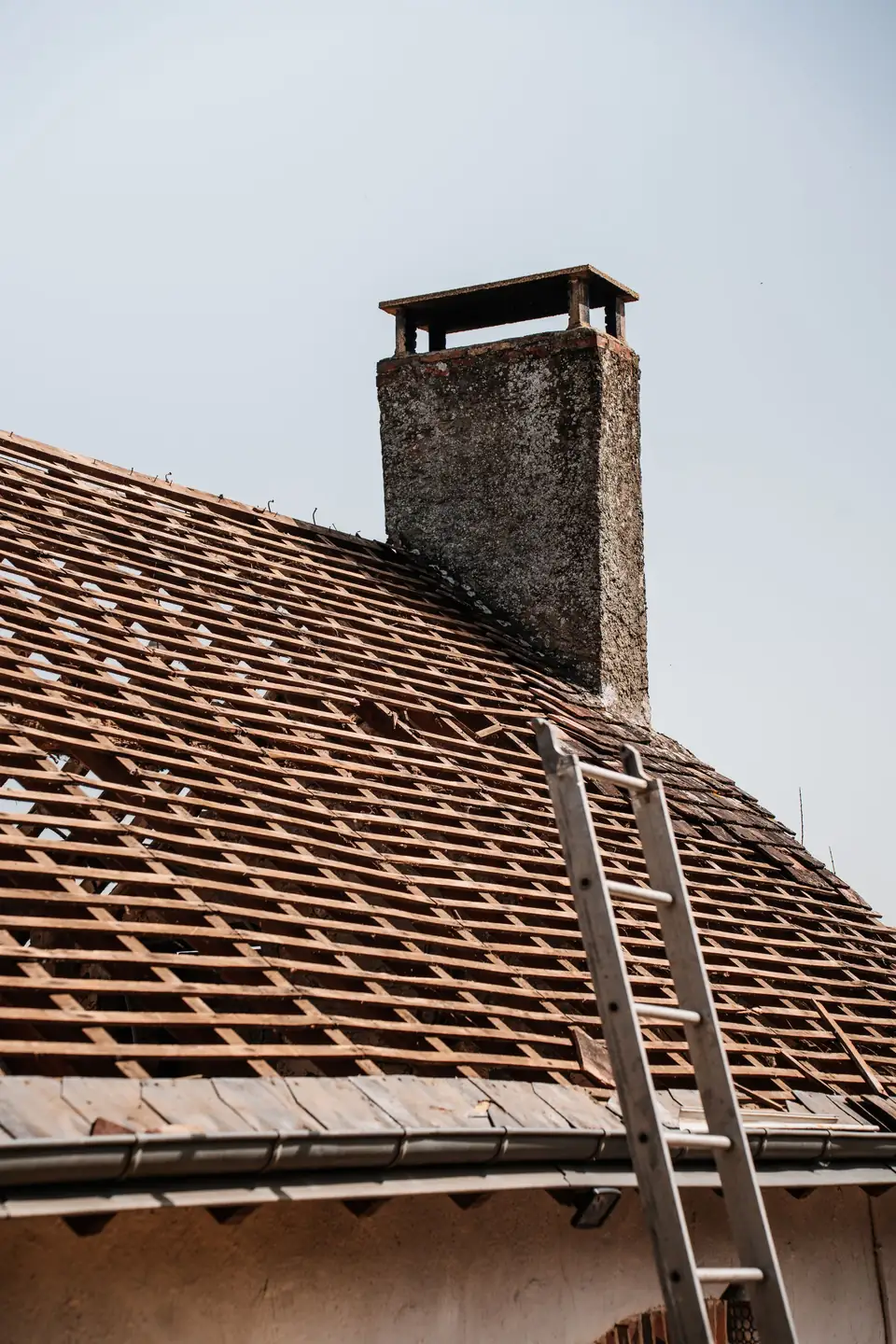
Roof repairs
Slipped and broken tiles and slates, leaks, loose ridges and storm damage put right.
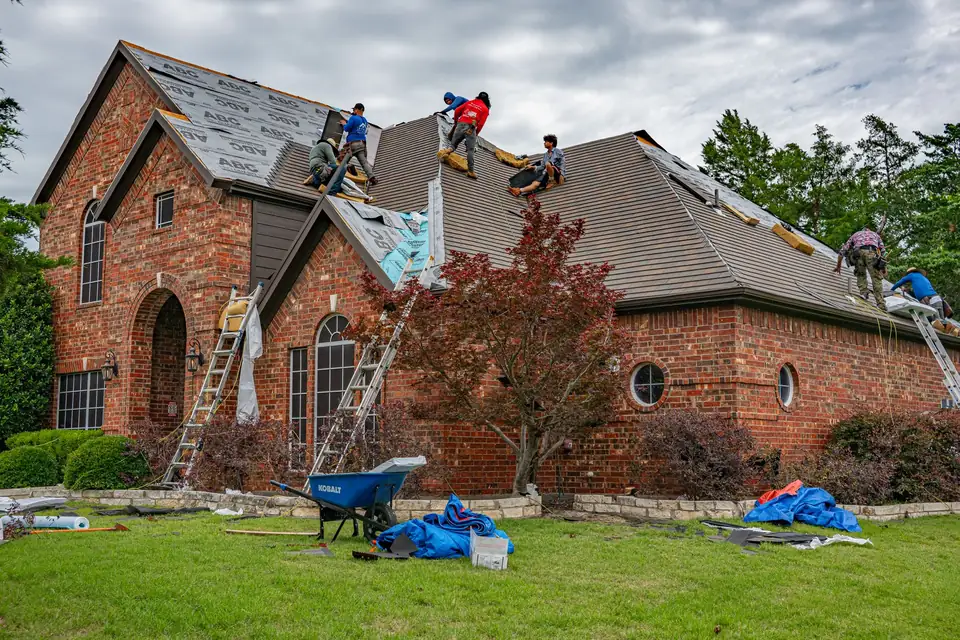
New roofs and re-roofing
Strip and re-cover in slate or tile, with new underlay, battens and leadwork.

Flat roofs
Garage, extension and dormer flat roofs replaced, with the deck checked and falls corrected.
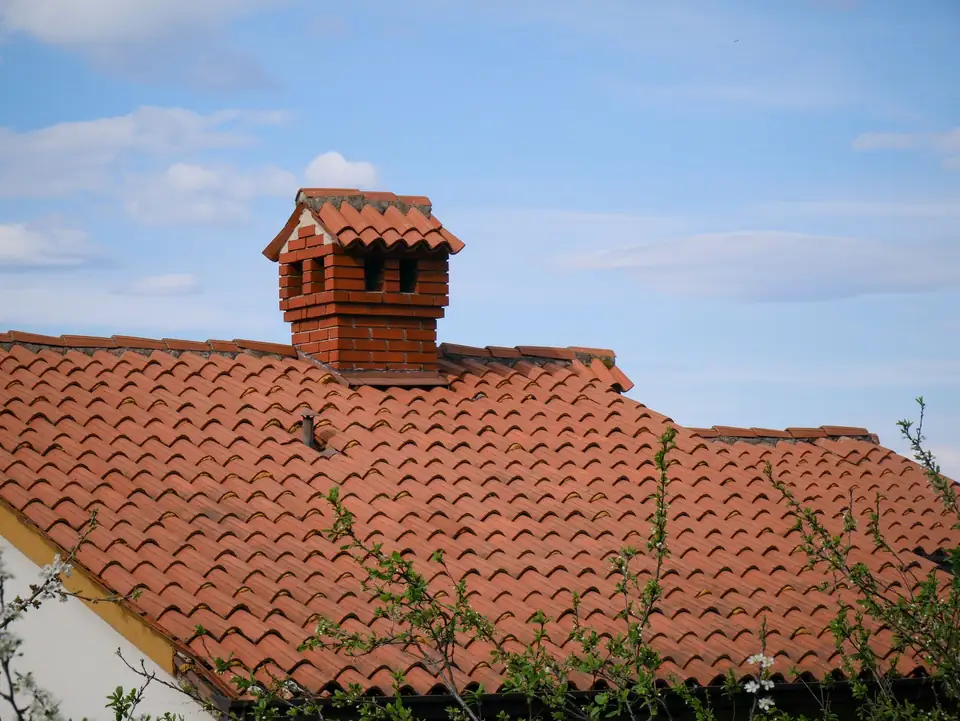
Chimneys and leadwork
Repointing, flaunching, pots and cowls, lead flashings, valleys and aprons.
Gutters, fascias and soffits
Gutters cleared, realigned or replaced, with fascia and soffit boards renewed.
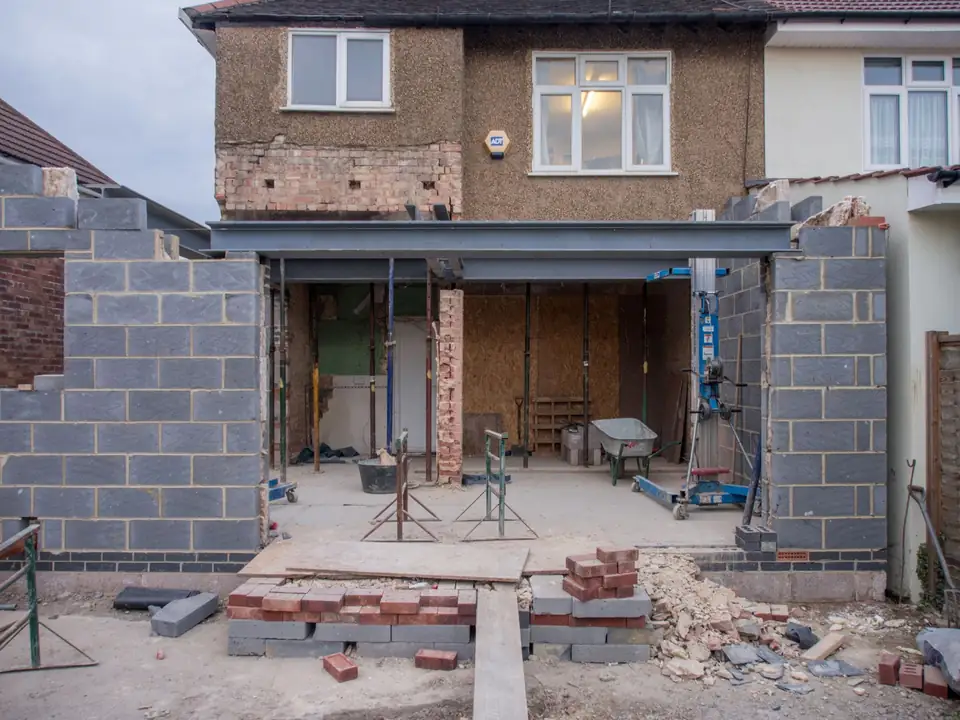
Extensions and building work
Single-storey extensions, structural openings, brickwork and the roofs that go on them.
Repair or replace?
Repair, overlay or replace?
It is the first thing most people ask. The honest answer depends on the condition of the whole roof, not just the leak.
| Repair | Overlay (flat roofs) | Replace | |
|---|---|---|---|
| Right when | Faults are local and the rest is sound | Covering is tired but the deck is dry and firm | Faults are widespread or keep returning |
| What happens | Damaged pieces replaced, flashing or ridge re-fixed | New membrane laid over the existing one | Covering stripped, timbers checked, rebuilt |
| Disruption | Usually short, often without scaffold | Short | Scaffold up for the duration |
| Watch for | Repeat visits on a roof that is worn out | Trapping damp if the deck is already wet | Higher cost now, fewer call-outs later |
Recent jobs
Recent roofing and building jobs
A few jobs that show the range: re-roofs, a flat roof and an extension.
How it works
From first call to clean gutters
You tell us what you have seen
A call or the form, with a photo from the ground if you have one.
We survey the roof
We look at the whole roof, not just the leak, and photograph what we find.
Written quote
Itemised, with materials named and any scaffold shown separately.
The work
A start date agreed in advance, and a call if the weather moves it.
Photos and tidy-up
After pictures sent to you, gutters emptied, ground swept.
What your quote will show
- Photographs of each fault we found
- The work, described in plain words
- Materials by name and type
- Scaffold or access costs on their own line
- What is not included, so nothing is assumed
- How any hidden problems would be priced
Questions we are asked most
Do you charge for a roof survey?
Ask when you book. Whether a visit is chargeable depends on the job, and we tell you before we come out, never afterwards.
Can you price from photographs?
Photographs help us know what to bring and how urgent it is. The quote itself always follows a visit, because the cause of a leak is often not where it shows.
Water is coming in now. What should I do?
Catch the water, move what you can, and ring us. Do not go onto the roof. If we cannot make a permanent repair straight away we can usually fit a temporary cover.
Do I need scaffolding?
Not always. Small repairs can often be done from a ladder or tower. Re-roofs, chimney work and anything over a conservatory generally need a scaffold, and the quote shows it on its own line.
Will you find more problems once you start?
Sometimes, particularly with timbers that cannot be seen until the covering is off. The quote explains how extras would be priced, and we stop and show you before doing anything that costs more.
Worried about the roof?
Tell us what you have seen. We will come and look, and put it in writing.